Make September the month to create your Will
The Francis House 'Make a Will Month' scheme offers a substantial saving compared to the standard fee for the service.
Tuesday 18th August 2026


The Play Specialist Team ensures that every child or young person experiences moments of joy, creativity and comfort in an enriched hospice environment.
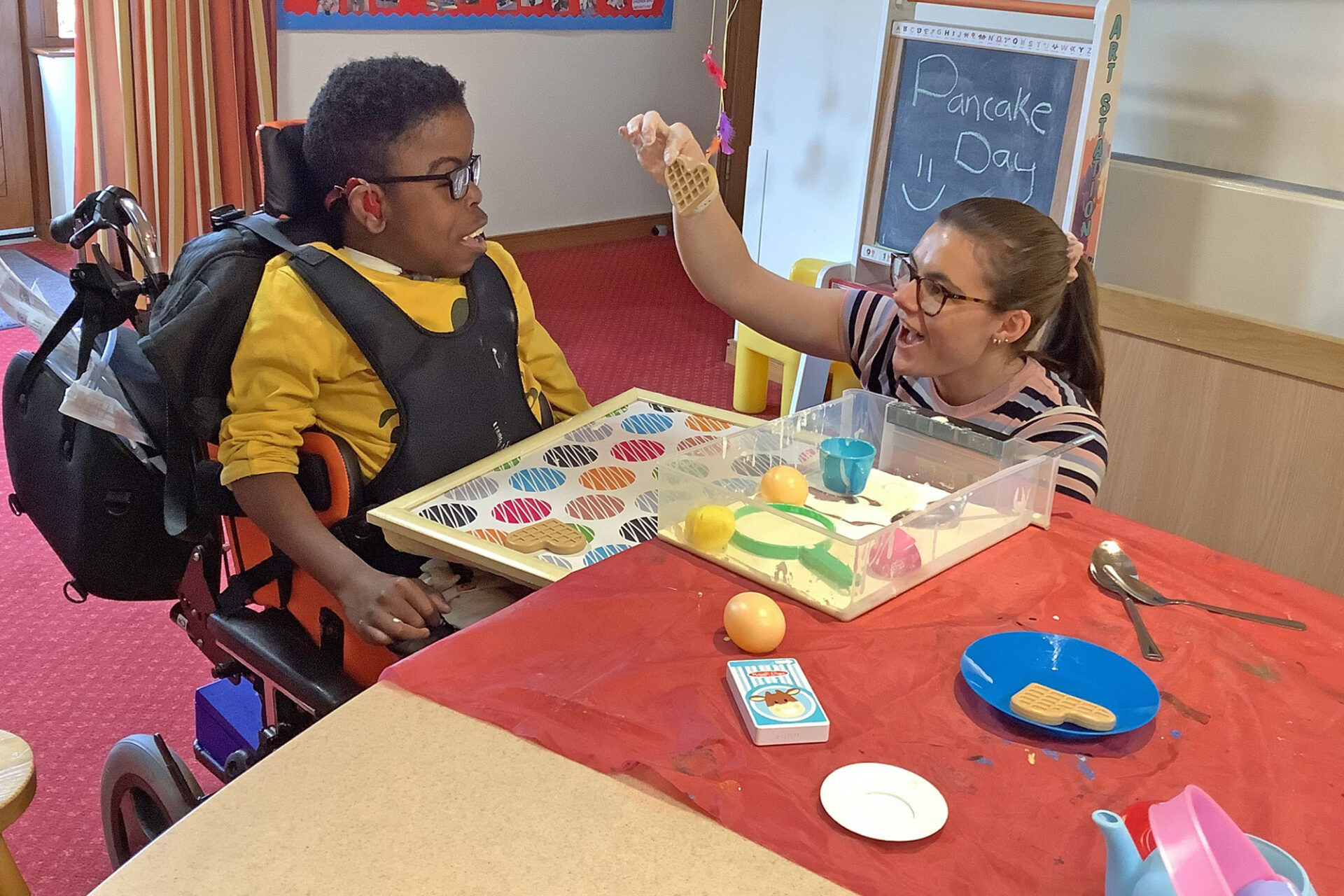
Thabani and play specialist Billie Harris having fun at Francis House.
It’s early morning and Billie Harris, one of a small team of play specialists at Francis House, is starting her shift. It’s a very different environment to the busy children’s hospital ward filled with 30 to 40 patients where Billie started her career as a qualified healthcare play specialist.
Her work then included preparing the children for a medical procedure or helping them overcome their fear of hospitals through play. Today it’s about finding that ‘little bit of joy’. That one thing that will make them smile.
“Every person has their own little thing,” says Billie. “For one child it’s Formula 1 racing. He comes to Francis House for day care and has always wanted to go and watch a race. I’m going to get F1 on the big screen in our cinema pod and try to build a makeshift car for him to go around his wheelchair.
“His mum and dad often talk about his love of Formula 1. He’s non-verbal, but he’s always responding in a way and that’s one thing that brings him joy.”
Shared play experiences can help families create lasting memories and reinforce bonds, crucial in a hospice setting where time may be limited.
Billie explains: “I try and facilitate therapeutic recreational and generalised play sessions. I also do a lot of memory making – hand prints and foot prints at end of life and also general memory making.”
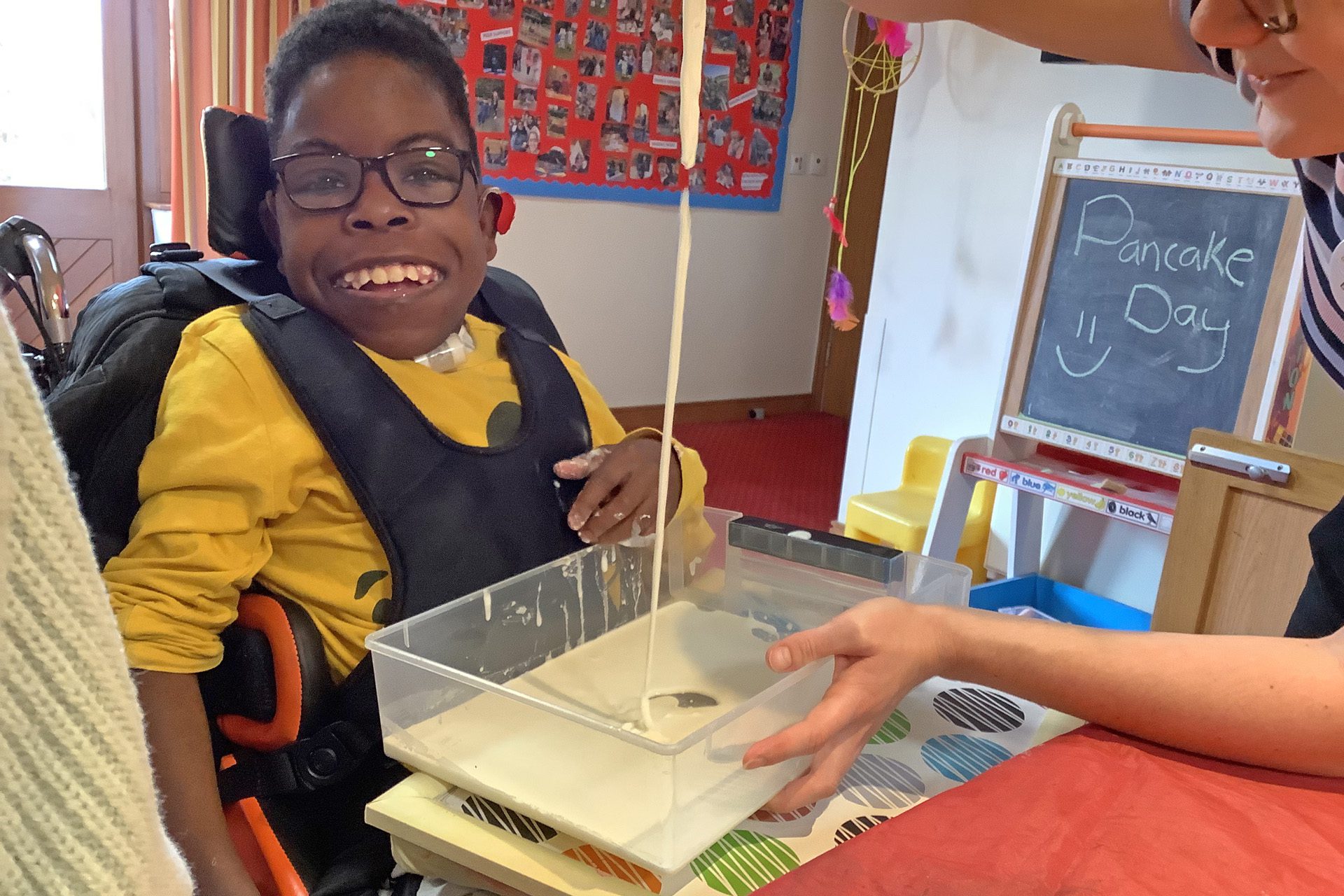
Thabani enjoying pancake day Francis House style!
There are three members of the Play Specialist Team: Billie Harris, Emily Hemsley and Oliver First
Activities are tailored to each individual, from babies to young adults, and the hospice environment gives staff time to get to know the families, building up a rapport and finding out what interests them.
Thabani is a happy and sociable boy. He has a tracheostomy – a tube in his windpipe which helps him to breathe – and he cannot eat food. He enjoys respite stays with his mum, Busi.
“It was pancake day and my plan was to make pancakes and do a tasting session. When I discovered that Thabani was in, as he doesn’t particularly like a messy play activity, we did a sensory activity instead using imitation pancakes and he had great fun watching,” says Billie.
Research has shown the importance of play in reducing stress and promoting resilience among children with life-limiting and life-threatening conditions.
Billie’s hospital training helps colleagues by using play distraction techniques if a child is having a tracheostomy changed or the occasional blood test. She also advises other staff members about moving to a different area in the hospice, like the conservatory, for any medical procedure, so as not to associate the child’s safe space like the sensory room or their bedroom with anything other than having fun.
In addition to one-to-one play sessions, a common group activity includes sensory bags with sensory stories. The Gruffalo is a popular choice, with pine cones for the woods, squeaky material for a mouse or a feather for the owl that can be brushed across cheeks or rubbed against hands.
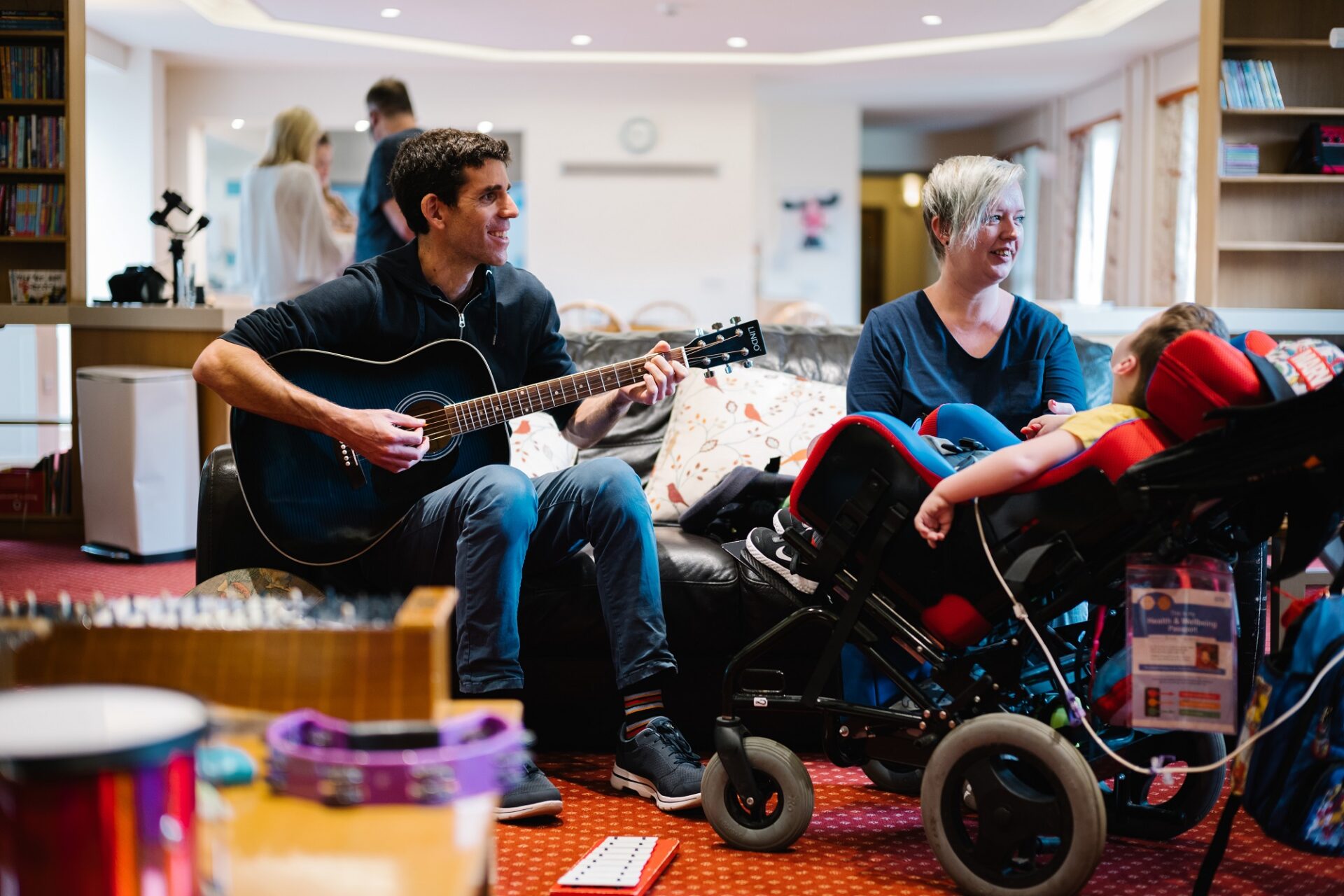
Oliver First, playing songs to a family on respite.
The Play Specialist Team recognise the unique emotional needs of siblings who are often deeply affected by their brother’s or sister’s illness. Some siblings may never have experienced playing with a brother or sister who cannot talk or lift their arms up in the same way that they can. The team can help them to form a bond with their sibling by doing simple play activities.
With a background in social work and counselling, and as a part-time specialist mentor for university students, Oli First finds the work at Francis House incredibly rewarding.
“My job is play,” says Oli with a smile. “It’s kind of a nice thing to do, trying to figure out ways to make people happy and enjoy the time they have. It’s an unusual environment, people working with children with a short life expectancy; it can be quite intense. For the most part I set that aside and try to be present for somebody without thinking about their illness.
“If I’m working with people who are able to communicate their wishes to me, I’ll ask them what they might fancy doing. For example, some of the lads who come here like to do a blindfold tasting session and I’ll ask them what food they want to try. Or I might do a treasure hunt through the hospice where one clue leads to the next.”
“I really try to listen and take seriously what somebody says to me, even if it’s not verbally. They might be able to communicate to some degree with the cues that they give. Giving them my full attention – that has an impact. That they are being listened to and not just having an agenda pushed on them.
“Being respectful is a big part of it; building up a relationship with somebody so that they can trust you. They’re more likely to have fun.
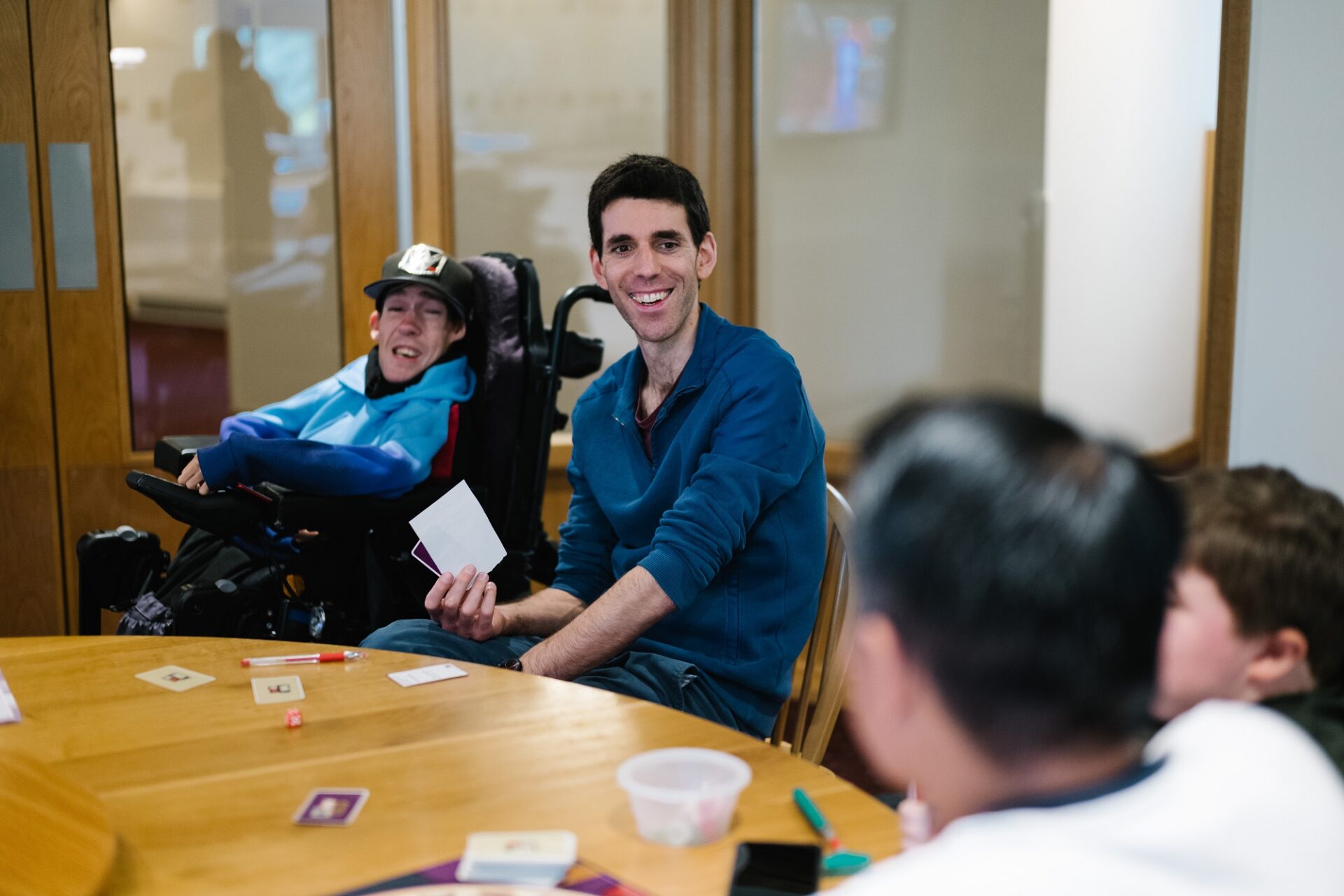
Quizzes and games make mealtimes more fun.
“In the sensory room, I quite often get the guitar out and play some songs for them, even though I’ve got a terrible voice! I’ll sing and make up silly songs and get the young person to strum the guitar themselves or put their hand on my hand so they can feel the rhythm.”
The play specialists work closely with other teams in the hospice including homecare, sibling support, and when a child is at the end of their life.
“Finding ways of making the impossible possible is our job,” says Billie. “One little boy was at the end of his life and wanted to go to the beach. That wasn’t possible, so we brought the beach to him by bringing a load of sand into his bedroom. Another child liked music and dancing and we managed to get hold of a Mexican dance group who did a big performance.”
Oli says: “When people ask me what I do for work, I say I don’t work; I play.”
The Francis House 'Make a Will Month' scheme offers a substantial saving compared to the standard fee for the service.
Tuesday 18th August 2026
Mark Towler completes 24 hour motorbike ride to raise funds for Francis House.
Wednesday 5th August 2026